

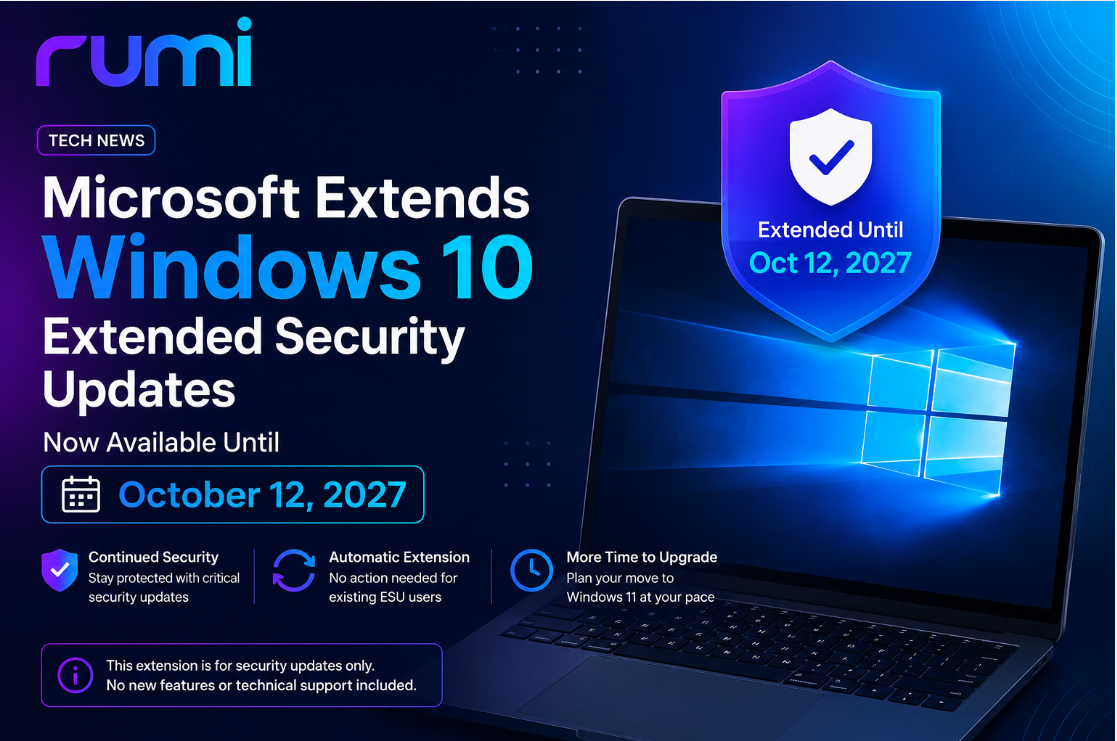
Microsoft Gives Windows 10 Users One More Year
In a move that will be welcomed by millions of PC users worldwide, Microsoft has quietly extended the Windows 10 Extended Security Updates (ESU) program by another year. Instead of ending in October 2026 as previously planned, eligible Windows 10 devices will now continue receiving security updates until October 12, 2027. This change provides additional breathing room for users and organizations that haven't yet transitioned to Windows 11.
Why Microsoft Extended Support
Although Windows 11 has been available for several years, Windows 10 remains one of the most widely used desktop operating systems. Many users continue to rely on older hardware that does not meet Windows 11's minimum requirements, while businesses often require more time to complete large-scale device upgrades.
By extending the ESU program, Microsoft is acknowledging that a significant number of users still depend on Windows 10 and need additional time before migrating.
New Windows 10 Support Timeline
The updated timeline now looks like this:
- October 14, 2025: Standard Windows 10 support ended.
- October 2025 – October 2027: Extended Security Updates (ESU) available.
- October 12, 2027: Consumer ESU program officially ends.
Who Will Receive the Updates?
Users already enrolled in Microsoft's Extended Security Updates program will automatically continue receiving security patches through October 2027 without taking any additional action. According to Microsoft's updated documentation, existing participants are automatically covered by the extended deadline.
The updates remain focused on:
- Critical security patches
- Vulnerability fixes
- Protection against newly discovered threats
The ESU program does not include:
- New Windows features
- Performance improvements
- Technical support
Why This Matters
Security updates are essential for protecting computers against malware, ransomware, and newly discovered vulnerabilities.
Without security patches, unsupported operating systems become increasingly vulnerable to cyberattacks. Microsoft's decision helps reduce those risks for users who cannot immediately upgrade their hardware.
Should You Stay on Windows 10?
While the extended support is good news, it should be viewed as temporary relief rather than a permanent solution.
You should continue planning to upgrade if:
- Your PC supports Windows 11.
- You're purchasing a new computer.
- Your organization has long-term security requirements.
However, if your current hardware still performs well and isn't compatible with Windows 11, the additional year of security updates offers valuable extra time.
Final Thoughts
Microsoft's decision to extend Windows 10 security updates until October 2027 provides welcome flexibility for millions of users still relying on the operating system. Rather than forcing immediate upgrades, the company is giving consumers and businesses more time to plan their transition while remaining protected against modern security threats.
If you're still using Windows 10, this extension means you can continue using your PC more safely—but it's still wise to start planning your eventual move to Windows 11 before support finally comes to an end.